You can be harmed by a wildfire you will never see. Smoke from a fire routinely travels a thousand kilometres or more, and the haze that settles over a city several days later carries the part of the smoke that matters most — particles small enough to pass through your lungs and into your blood.
Most advice about wildfires is about the flames. This is about the smoke, which reaches far more people and is the reason a fire in one country becomes a health problem in another.
What is actually in the smoke
Wildfire smoke is a mixture of gases and particles, but the health effects are dominated by one component: PM2.5 — particulate matter smaller than 2.5 micrometres, roughly a thirtieth of the width of a human hair.
Size is what makes it dangerous. Larger particles are caught in the nose and throat and coughed out. PM2.5 is small enough to travel to the deepest part of the lung, and a fraction of it crosses into the bloodstream. That is why the effects are not limited to coughing: exposure is associated with heart attacks and strokes as well as asthma attacks, and short-term spikes show up in hospital admissions within days.
The smoke also carries carbon monoxide, nitrogen oxides and volatile organic compounds. Close to a fire these matter a great deal. Hundreds of kilometres downwind, PM2.5 is what remains.
Why smell is a bad guide
Two things make people underestimate smoke:
You stop noticing it. The sense of smell adapts within hours. A day into a smoke event, people report that it "cleared up" when air-quality readings say it has not.
The worst air often does not look like smoke. Aged smoke that has travelled for days has lost its smell and its visible plume structure, and reads as ordinary haze — while still carrying PM2.5 in quantity.
Judge it by measurement, not by nose or by eye. Most countries publish an air quality index; the number to look for is the PM2.5 figure behind it.
Reading air quality without getting lost in it
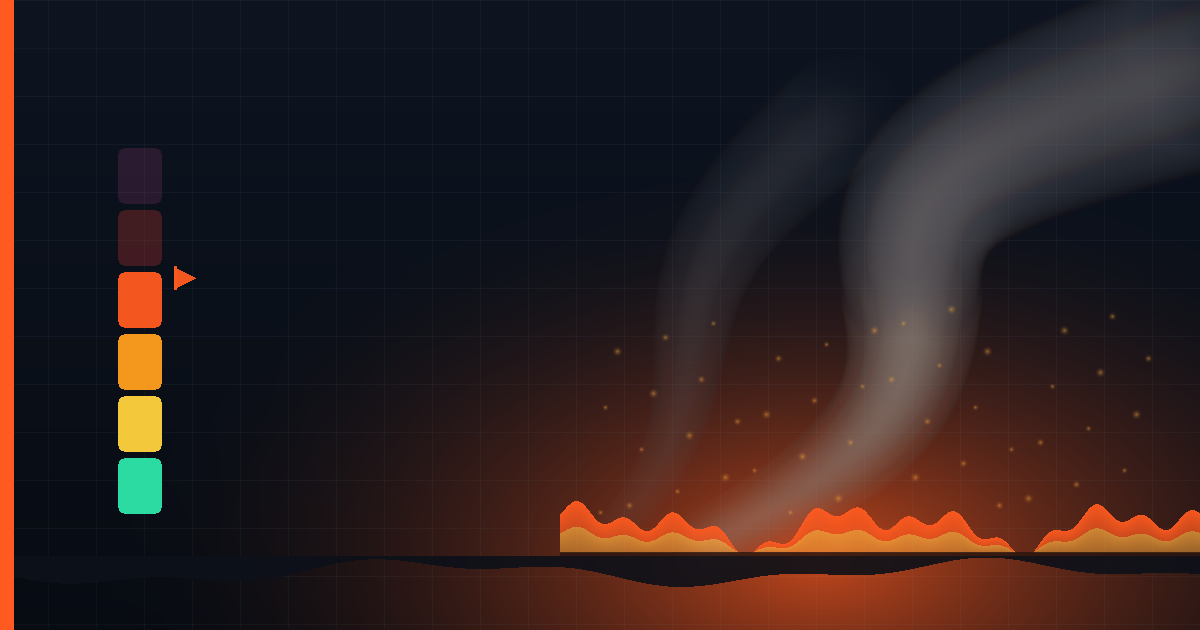
Air quality indexes differ by country, which makes cross-border comparison confusing. The practical thresholds, using the widely used 0–500 AQI scale, are simpler than the colour charts suggest:
- Up to 50 — no action needed.
- 51–100 — fine for most people. Anyone with asthma or heart disease should keep medication to hand.
- 101–150 — sensitive groups should cut down outdoor exertion.
- 151–200 — everyone should reduce prolonged outdoor exertion; sensitive groups should stay indoors.
- 201–300 — avoid outdoor activity. Close up the house.
- Above 300 — stay indoors with filtered air. Outdoor work should stop.
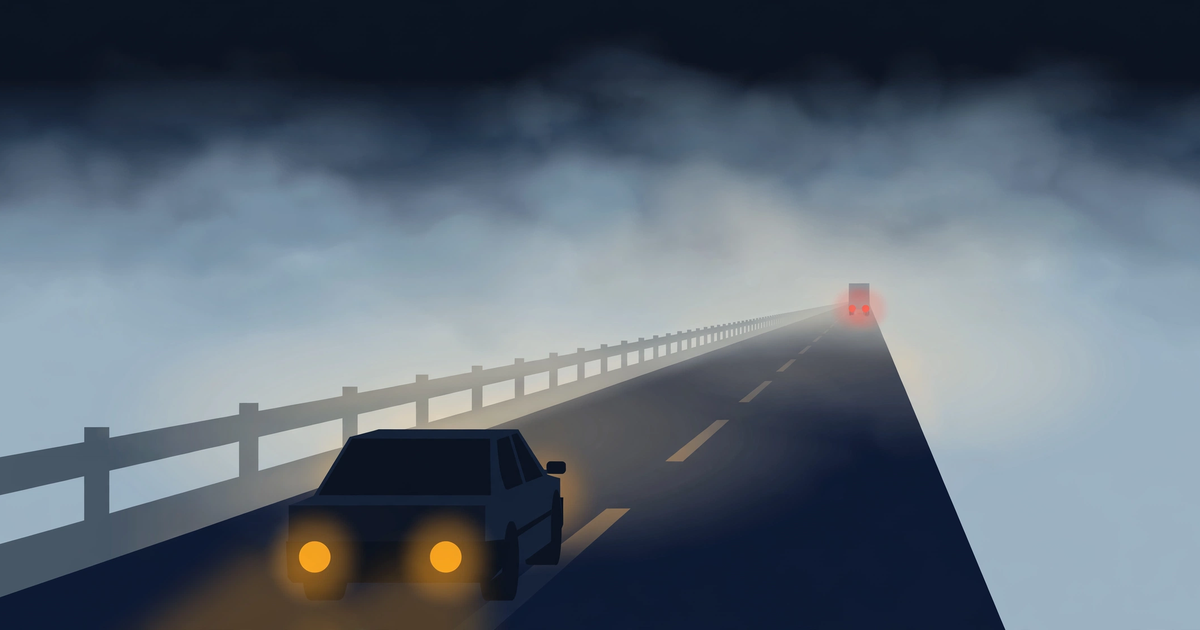
One useful rule of thumb during a smoke event: if you cannot clearly see a landmark you know to be a few kilometres away, the air is likely in the unhealthy range.
What actually protects you
Masks — only some of them
This is where most effort is wasted. Cloth masks, surgical masks and bandanas do very little against PM2.5; the particles are far smaller than the gaps in the fabric. What works is a properly fitted respirator — N95, KN95 or FFP2 — and the fit matters as much as the rating. Air takes the easiest route, so a gap along the cheek or under the chin lets unfiltered air straight in. Facial hair along the seal line defeats it entirely. A wet mask stops working; replace it.
Indoors, which is where you win
- Close windows and doors, and keep them closed at night too if the smoke is still present.
- Set air conditioning to recirculate rather than drawing in outside air. In a car, use the recirculation button.
- Run an air purifier with a HEPA filter in the room you spend most time in. Sized for the room, this is the single most effective thing indoors.
- No purifier? Build one. A box fan with a high-grade furnace filter taped to the intake side removes a large share of PM2.5 for very little money. This is a genuinely effective emergency measure, widely recommended by air-quality researchers.
- Do not add indoor smoke — no candles, incense, frying, vacuuming or smoking while the air is bad.
- Create one clean room rather than trying to filter the whole house: one room, sealed, with the purifier, where people sleep.
Ionisers and ozone generators are not the answer. Ozone is itself a lung irritant, and these devices do not remove particles the way a HEPA filter does.
Who needs to act sooner
- People with asthma or COPD — keep reliever inhalers with you and follow your action plan early rather than late.
- People with heart disease. The cardiovascular effects of PM2.5 are as significant as the respiratory ones and get far less attention.
- Children, who breathe more air relative to body weight and whose lungs are still developing.
- Pregnant women.
- Older adults.
- Outdoor workers, who accumulate the largest exposure of anyone and usually have the least choice about it.
Symptoms worth taking seriously: worsening shortness of breath, chest tightness or pain, a fast or irregular heartbeat, wheezing that does not settle, or dizziness. Chest pain or severe breathlessness needs emergency care, not a wait-and-see.
If a fire is close, not just its smoke
Smoke advice is not evacuation advice. If fire is approaching:
- Leave early. The overwhelming majority of wildfire deaths happen to people who left too late and were caught in the open or in a vehicle.
- Do not wait for an official order if you can see or smell fire nearby and the wind is coming from it.
- Know two routes out, because fire and traffic close roads.
- Wear natural fibres — cotton, wool. Synthetics melt.
- Clear leaves and dry material from gutters and around the building before fire season, not during it. Embers landing on debris start most house fires, often well ahead of the fire front.
How we track fires — and what our numbers mean
Fires are one of the few categories where satellites see more than reporters do. We collect thermal hotspot detections from NASA FIRMS, which observes the entire planet several times a day, alongside official alerts from the UN's GDACS system, European Meteoalarm warnings, and local news reporting.
Satellite data needs interpreting honestly. A single hot pixel is not a wildfire — it might be agricultural burning, a gas flare or an industrial furnace. We therefore group detections onto a grid and only publish a cluster as a fire when it is genuinely substantial: at least ten detections in one cell, or a total radiative power above 250 megawatts. Low-confidence pixels are discarded before that. It means we miss small fires, and we would rather miss those than publish a sugar-cane field as a disaster.
Follow the current picture on the wildfire tracker, see everything logged in the past day on today's page, or check your own area through the city index or a country page such as Pakistan. To be told when something significant is recorded near you, set up free alerts, and if you know of a fire we have not recorded, please report it.
Fire weather follows heat, so during a smoke event it is worth reading our guide to heat exhaustion and heat stroke as well — the two arrive together and the advice pulls in opposite directions, since staying indoors with the windows shut is exactly what you must not do in extreme heat without cooling.
The short version
The danger in wildfire smoke is PM2.5, it travels for thousands of kilometres, and your nose stops noticing it long before it stops being harmful. Check a measured air-quality reading rather than trusting how the air looks. Cloth and surgical masks do not help; a well-fitted N95 does. Indoors, close up, recirculate, and run a HEPA purifier — or a box fan with a furnace filter taped to it — in one room. And if the fire itself is near, leave early rather than well.