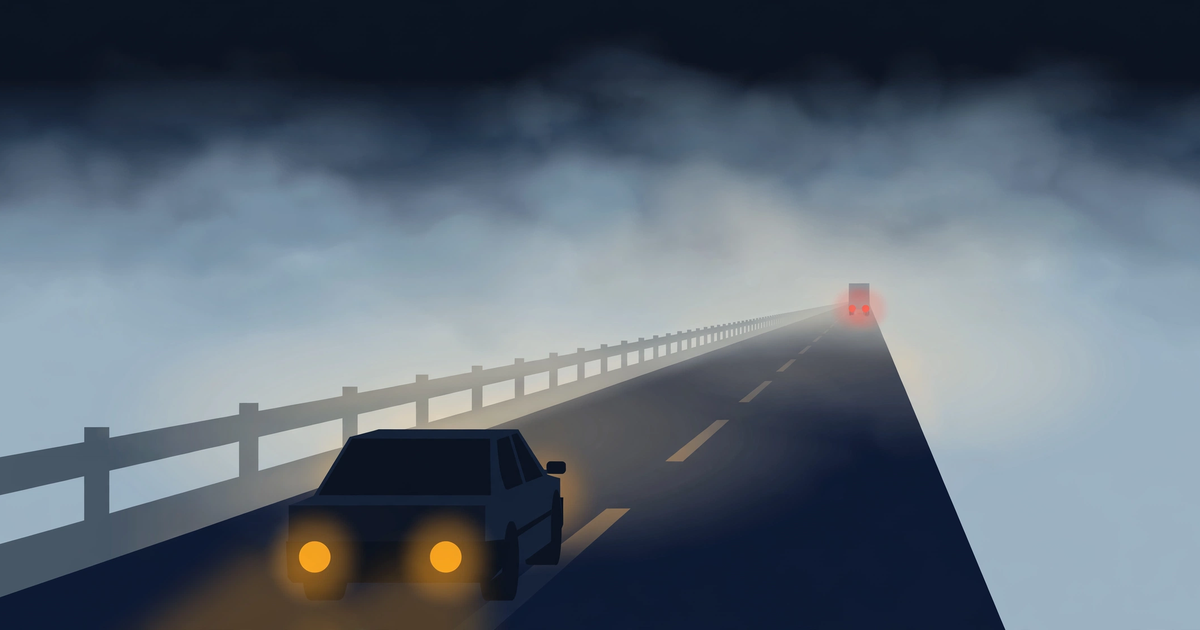
Most people who die in floods are not swept away by a wall of water. They drown in water that did not look dangerous, usually in a vehicle, usually within a few hundred metres of somewhere safe. The water was shallow. They had done it before. It looked passable.
Understanding why shallow moving water is so much more dangerous than it appears is the single most useful thing you can know about floods.
The numbers that decide it
Moving water exerts force in proportion to the square of its speed. Double the speed and the force on your legs — or on the side of your car — goes up four times. That is why depth alone tells you very little, and why these figures are lower than almost anyone expects:
- 15 cm (6 inches) of fast-moving water is enough to knock an adult off their feet.
- 30 cm (12 inches) is enough to float most cars. A floating car has no steering and no brakes.
- 60 cm (2 feet) will carry away almost any vehicle, including SUVs and pickups.
Height is not the only problem. You cannot see what the water has done to the road underneath it. Floodwater routinely lifts manhole covers, washes away the ground beneath tarmac leaving a hole with a road-coloured surface over it, and carries debris, live cables and open drains. What looks like 20 cm across a familiar street may be a two-metre hole where the road used to be.
The US National Weather Service reduced this to four words that are worth remembering in any language: Turn Around, Don't Drown.
Flash floods and river floods are different problems
Flash floods
These arrive within minutes to a few hours of the rain, often from rain that fell somewhere else. A dry riverbed, a narrow street, an underpass or a valley can go from empty to lethal faster than you can walk out of it. Mountain and hill areas, cities with hard surfaces and blocked drains, and anywhere downstream of a storm are the usual settings. With a flash flood there is rarely time to plan — only time to move uphill.
River and monsoon flooding
These build over days as catchments saturate and rivers rise. There is usually warning, and the danger is less about speed than duration: water standing for days, homes cut off, drinking water contaminated, and disease following behind. Pakistan's 2022 floods, which submerged roughly a third of the country, were this kind — slow enough to see coming, vast enough that seeing it coming was not enough.
Before: the preparation that actually matters
- Know whether you are on a flood plain and how high your floor is above the nearest watercourse. This one fact changes every other decision.
- Decide your route out in advance, and make sure it goes uphill rather than along a valley or a road that follows a river.
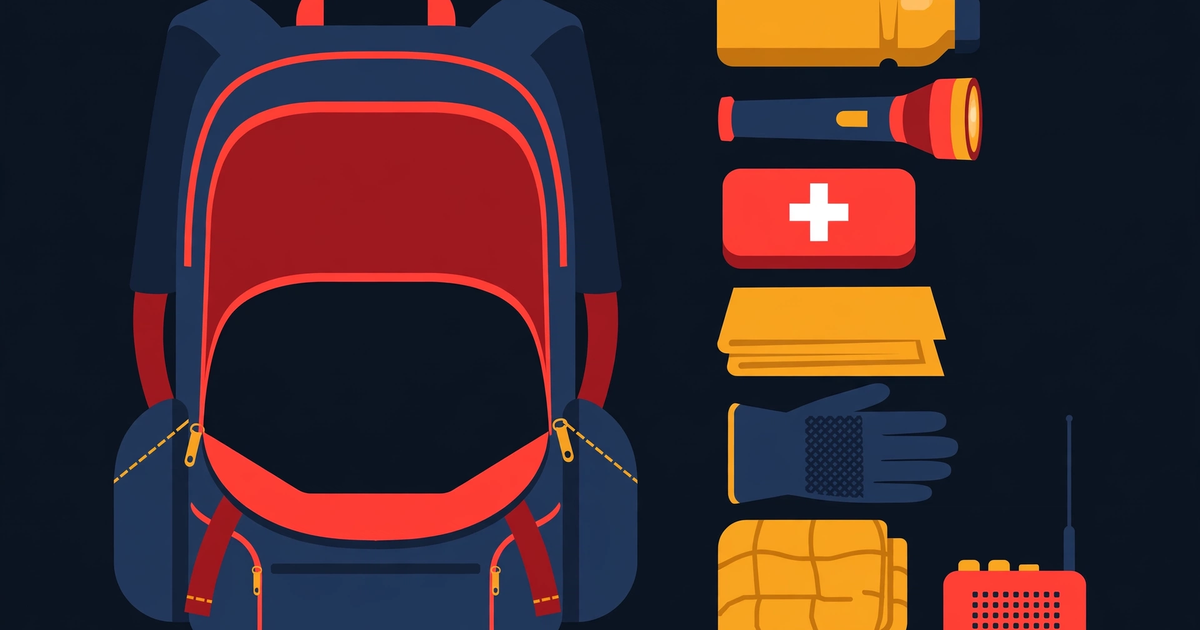
- Keep documents, medicines and a power bank in one bag that can be picked up in ten seconds. In practice this is the difference between leaving in time and leaving late.
- Agree a meeting point with your family that does not depend on phones working.
- Know where your electricity main switch is and how to turn it off — while it is still dry.
- Move what matters upstairs early. Waiting until water is in the house means moving things in the dark, in water, with the power off.
During: the decisions that save lives
- Never drive into water of unknown depth. If the road ahead is covered, turn around. The detour is measured in minutes; the alternative is not.
- If your car stalls in rising water, get out immediately and move to higher ground. Do not stay in the vehicle waiting for the water to fall.
- If water is rising around a moving car and you cannot get out of the door, undo seat belts, open or break a side window (not the windscreen — it is laminated and will not break) and get everyone out through it. Children first.
- Do not walk through moving water. If you absolutely must cross still water, use a stick to test the ground ahead of each step, and never do it alone.
- Go up, not out, if you are cut off — but not into a closed attic with no way onto the roof.
- Stay away from anything electrical that has been in contact with water, and from downed power lines. Water conducts, and the hazard extends beyond the visible cable.
- Keep out of storm drains, culverts and underpasses entirely. They fill fastest and offer nothing to hold on to.
After: the part people underestimate
More injuries happen in the days after a flood than during it, and the causes are mundane:
- Do not switch the electricity back on until an electrician has checked it. Do not enter a flooded basement while power is connected.
- Assume the water is contaminated. Floodwater carries sewage, fuel and agricultural chemicals. Wash thoroughly after any contact, cover cuts, and do not let children play in it.
- Do not drink tap water until authorities confirm it is safe, and boil if there is any doubt.
- Watch for waterborne disease. Cholera, typhoid and hepatitis A follow floods where sanitation has been damaged, and mosquito-borne illness follows a few weeks later as standing water breeds. Our outbreak tracker records these where they are officially reported.
- Treat the building as suspect. Water weakens foundations and undermines walls, and collapses commonly happen after the water has gone. The signs to check are in our guide to building collapse warning signs.
- Photograph everything before you clean up — for insurance and for any compensation claim.
Reading a flood warning properly
Warning vocabulary is not decoration, and the two words that matter most are easy to mix up:
- A watch means conditions are right for flooding. It is a signal to prepare, move vehicles and check your route.
- A warning means flooding is happening or about to. It is a signal to act now.
Most of the flood records on this site come from national meteorological services issuing exactly these — the majority of what we currently hold is from official watches and warnings rather than damage reports. That is worth knowing when reading our numbers: they show where flooding is being warned about, not how many people it affected.
Where to see what is happening now
We collect flood alerts and reports continuously from national weather services, the UN's disaster alert system, satellite observation and local news in local languages, and give each one a permanent page.
You can follow the running picture on the flood tracker, see everything recorded in the last 24 hours on today's page, check a specific country such as Pakistan, or find your own area through the city index. To be told when something serious is recorded near you, set up free alerts — and if you know of flooding that has not been reported, please tell us about it.
The short version
Six inches of moving water knocks you over. A foot floats your car. You cannot see whether the road is still under the water. Turn around rather than drive through, get out of a stalling car immediately, go uphill rather than along the valley, and treat everything the water touched as contaminated and electrically unsafe afterwards.
Nearly every flood death is a decision that looked reasonable at the time.