Tsunami warning systems are one of the genuine successes of modern hazard science. Buoys detect the wave, models project its path, and messages go out across an ocean within minutes.
And for the people closest to the earthquake — the ones in the most danger — that entire system is often too slow.
If the fault that generates a tsunami is near your coast, the first wave can arrive in ten to twenty-four-three minutes, sometimes less. That is not enough time for detection, confirmation, message drafting, dissemination and public response. Which means the people at greatest risk cannot rely on being told. They have to recognise it themselves.
The good news is that the natural warnings are unmistakable once you know them, and there are only three.
The three natural warnings
1. A long earthquake, if you are near the coast
Not a strong one — a long one. The single most useful discriminator is duration. A shake that goes on for roughly a minute or more, or one strong enough that standing is difficult, near the coast, is the warning. Move.
Duration matters because a long rupture is what displaces enough seafloor to move an ocean. A brief sharp jolt, however frightening, generally has not.
There is a harder case, and it has killed a great many people: a "tsunami earthquake" — a slow rupture that produces surprisingly weak, rolling, unimpressive shaking while still generating a large wave. If the shaking near a coast is weak but goes on and on, treat the duration as the signal, not the strength.
2. The sea behaves wrongly
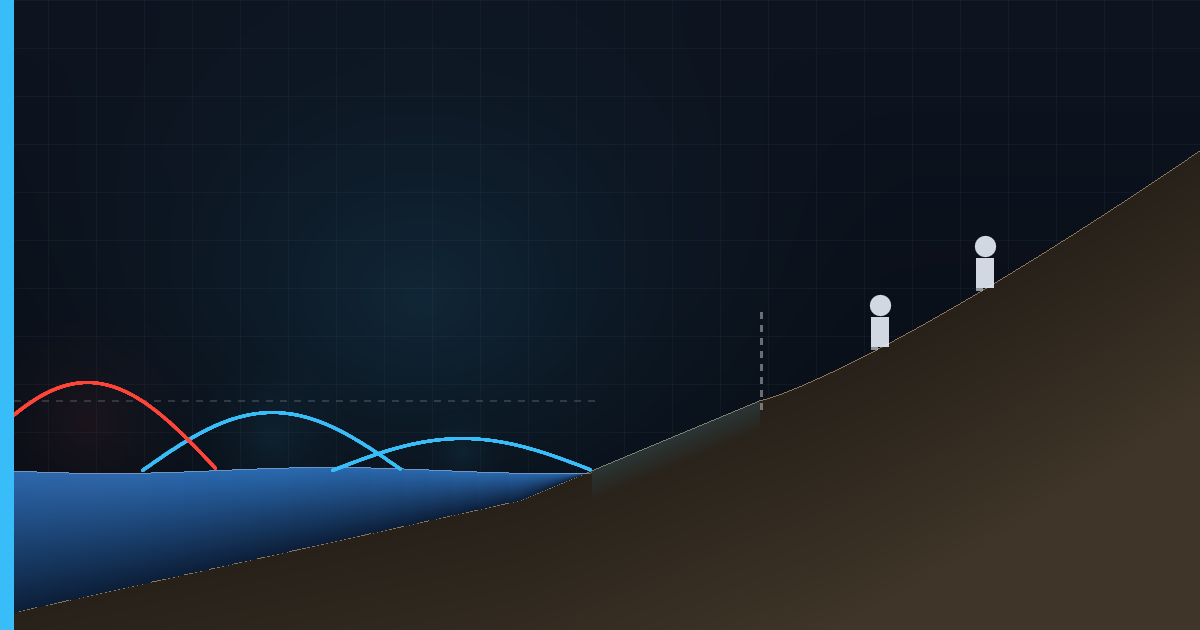
The famous one is the water drawing back — the sea retreating far beyond the normal low tide, exposing reef, rocks and stranded fish. That happens when the trough of the wave arrives first, and the withdrawal is roughly proportional to the wave that follows.
But this only happens about half the time. If the crest arrives first, there is no warning drawback at all — the sea simply rises. So a rapid, unusual rise in sea level is exactly as serious as a retreat. Waiting to see the water pull back is a mistake; it may never pull back.
People have died walking out onto the exposed seabed to look at the fish. It is such a consistent detail in historical accounts that it is worth stating plainly: an exposed seabed is not a curiosity, it is the last warning.
3. A loud roar from the sea
Survivors describe a sustained roar like a jet engine or a freight train coming from the water. If you hear that, the time for deciding is over.
What to do, and how the instructions differ from other hazards
Tsunami advice is unusual in one respect: go on foot, and go immediately, without waiting for confirmation.
- Move inland and uphill. The goal is height first, distance second. Widely used planning guidance is to get well above the shoreline and well away from it — and if you can only manage one, take height.
- Walk or run. Do not drive unless there is genuinely no alternative. Roads jam, and a jammed road on a coastal plain is a trap. This is the opposite of what most emergency instincts suggest.
- If there is no high ground — a flat coastal city, an atoll — go as far inland as you can, or upward inside a strong, tall, reinforced-concrete building. Vertical evacuation is a fallback, not a first choice.
- Do not go back for anything. Not possessions, not vehicles.
- Do not go down to watch. Every tsunami produces footage taken by people who were far too close, and some of those people did not survive taking it.
The part that kills people who survived the first wave
A tsunami is not a wave. It is a series, and the first is frequently not the largest. Waves can continue arriving for hours, separated by long, deceptively calm gaps in which the sea looks like it has finished.
People return in those gaps — to check a house, to look for relatives, to retrieve belongings — and are caught by a later, bigger wave. Stay away until officials say it is over, not until it looks over.
The water is also not a clean wall of sea. It arrives carrying vehicles, timber, roofing, boats and debris, and it drains back out with the same force, which is why the outflow is as dangerous as the inflow.
Distant tsunamis are a different problem
When the earthquake is thousands of kilometres away, the wave takes hours to cross the ocean, and the warning system works exactly as intended. In that case the official message is the primary signal — there will be no local shaking to feel.
So the two cases split cleanly:
- You felt a long earthquake near the coast → self-evacuate immediately, expect no warning in time.
- You did not feel anything but a warning was issued → follow the official instruction, you have time to do it properly.
A useful habit for anyone living on or visiting a coast: find out once, in advance, where the ground rises and how you would get there on foot. That is a ten-minute question with a permanent answer, and it is worth far more than any amount of reading during an emergency.
What we record
Tsunamis are one of the well-served hazards in our data. Warnings and messages come from NOAA and the Pacific Tsunami Warning Center, and the UN's GDACS system adds alert levels, so our tsunami records are among the more complete parts of the archive — unlike the news-derived categories that make up most of what we track.
Two honest caveats. First, most of what we record are warnings and advisories, not confirmed damaging waves; a busy tsunami feed is usually a busy seismic week, not a series of disasters. Second, our counts remain detections rather than occurrences, and severity on this site is a monitoring signal rather than an official assessment. The full explanation is in how we track every incident on Earth and on the about page.
Nothing on this site is an official warning service. For a real event, follow your national authority.
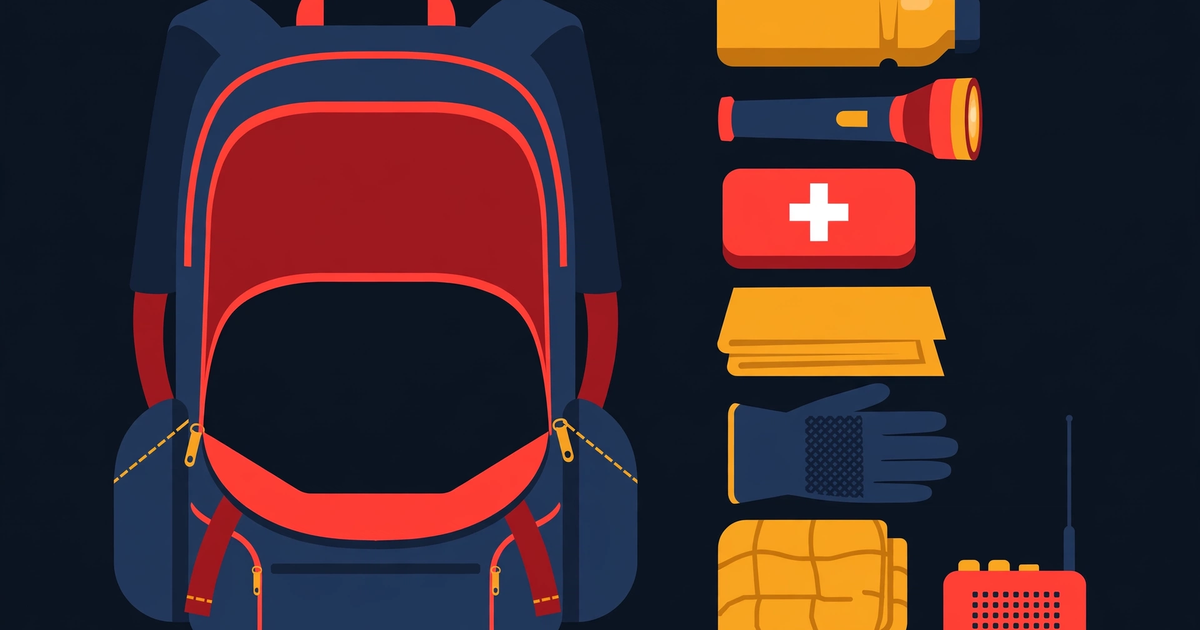
You can browse the archive on the incident record, check whether shaking near you was seismic on the felt an earthquake page, see records by country, or download the data from the data page. Since the trigger here is an earthquake, our guide to earthquake safety myths covers what to do during the shaking that comes first, and the emergency kit checklist covers what should already be packed.
The short version
If you are near the coast and the ground shakes for a minute or more, do not wait for a warning — it will probably not arrive in time. Go uphill, on foot, immediately. The sea drawing back is a warning, but so is the sea rising, and only one of those happens each time. And the first wave is often not the biggest, so the calm afterwards is not the end.
This article reflects established tsunami-preparedness guidance from national warning centres and geological surveys. It is general information and not an official warning service; in any real event, follow the instructions of your local authorities.