Rail is, by a wide margin, one of the safest ways to travel. The trains are not the problem. Almost everywhere in the world, the great majority of people killed on railways are not passengers at all — they are people who were on the track.
That fact reframes the whole subject. Rail safety, for nearly everyone reading this, is not about which carriage to sit in. It is about two places: the level crossing and the platform edge.
The physics that makes everything else make sense
A loaded freight train can take well over a kilometre to stop. Even a passenger train, braking hard, needs a distance measured in hundreds of metres.
By the time a driver sees you, the decision has been taken out of their hands. They will apply the brakes and sound the horn and the train will arrive anyway. There is no version of this where the train stops for you, and no amount of the driver's skill changes it.
Two consequences people consistently get wrong:
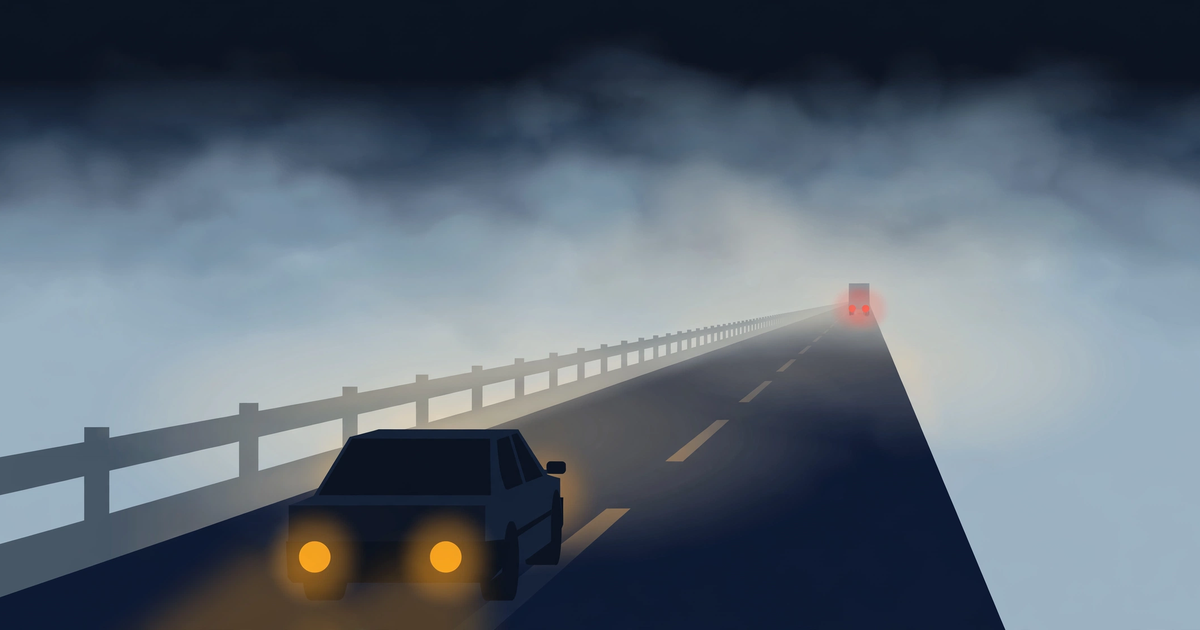
- Trains are much closer and much faster than they look. A large object approaching head-on gives almost no sense of speed, and the lack of engine noise on modern track removes the cue people rely on. Distance judgements at crossings are unreliable in a specific direction: they make the train seem further away than it is.
- Trains are quiet. Especially from the front, on welded rail, and especially to someone wearing earphones. "I would have heard it" is the assumption behind a large number of these deaths.
The level crossing
Level crossings are the single most dangerous piece of railway infrastructure for the public, and the pattern is remarkably consistent across countries.
What actually goes wrong
- Going around lowered barriers. The most common deliberate act, and it usually reflects a belief that the barrier came down too early. Sometimes it did — barrier timing is conservative on purpose, because it has to be.
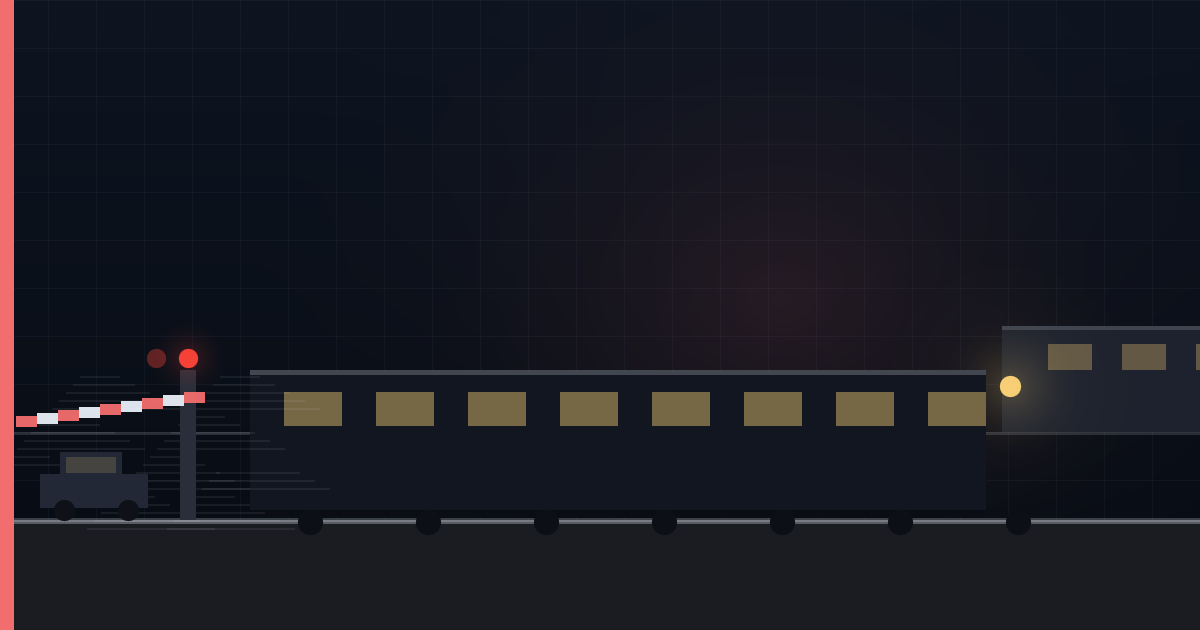
- The second train. One train passes, the barrier stays down, and someone crosses assuming it has finished. A second train is coming the other way, and it is now hidden by the first. Barriers rising, not a train passing, is the signal that it is over.
- Stopping on the crossing. Traffic ahead backs up, a driver edges on anyway, and the queue does not move. Never enter a crossing until there is confirmed space on the far side for your whole vehicle.
- Long, low or slow vehicles — trailers, tractors, loaded carts, low-slung cars — grounding on the hump or taking longer to clear than the driver expected.
- Unmanned and informal crossings, where there is no barrier and no warning, only a habit of looking. In much of the world these are where most crossing deaths happen.
- Pedestrians on the track as a shortcut — the walking route between two parts of a town that everybody uses and nobody has ever built a bridge for.
What to do
- Never go around a barrier. Not on foot, not on a motorcycle, not because it seems to have been down a long time.
- Wait until the barrier rises and the lights stop — not until a train has passed.
- Do not enter unless the far side is clear for your entire vehicle.
- Cross in one movement. Do not stop, do not change gear on the crossing, do not shift into a gear you might not find.
- At an unmanned crossing, stop, look both ways twice, and remove earphones. Look twice because a train that was hidden by a curve or a structure on the first look can be visible on the second.
If your vehicle stalls on a crossing
This is the situation people handle badly because their instinct is to save the vehicle.
- Get everyone out immediately. The vehicle is replaceable and there is no scenario in which staying with it helps.
- Walk away from the track at an angle, in the direction the train is coming from. This is counter-intuitive and it is important: if the train hits the vehicle, the wreckage is thrown forward along the track, so walking towards the oncoming train keeps you behind the debris rather than in front of it.
- Find the emergency telephone or the sign with the crossing's ID number and call it in. Every managed crossing has an identifier precisely so the signaller can stop trains for that location.
The platform edge
Platforms are the other place where ordinary people are killed on railways, and the causes are prosaic:
- The gap between train and platform, especially on a curve, where it can be wide enough to fall through — and particularly hazardous with children, prams and luggage.
- Standing too close as a train arrives. A fast train through a station drags a considerable volume of air with it, and the pressure change at the platform edge is more than enough to unbalance someone.
- Running for a closing door, or holding one, or stepping back on after the doors have begun to close.
- Crossing the tracks at the end of a platform instead of using the bridge or underpass.
If you or something you own falls onto the track: do not climb down. Tell staff, or use the emergency stop where one is provided. Even in a station where trains are slow, the electrified rail is a second, invisible hazard, and it does not need a train to kill.
Riding on roofs and in doorways
Where trains are overcrowded, people travel on roofs, in doorways, and hanging from grab rails. It appears in our records regularly, and the deaths are rarely from falling alone.
The specific hazards worth naming: overhead electrification, which can arc across a gap without contact and does not require touching anything; tunnels, bridges and signal gantries, whose clearance is measured against the train, not against a person standing on it; and platform edges and posts at the speed of a train.
This is not primarily a behaviour problem. It is a capacity problem, and the honest observation is that it appears in our archive where trains are too few for the people who need them.
What our records show, and what they miss
Rail accidents have no official live feed anywhere in the world. No national railway or regulator publishes incidents in real time in a machine-readable form. Every entry in our rail accident records is there because a journalist reported it.
That produces a sharp distortion in this category specifically. Derailments and collisions get reported; individual track deaths largely do not. So our archive over-represents the rare, dramatic multi-casualty crash and almost entirely misses the steady toll of people struck at crossings and on the line — which is the larger number nearly everywhere. If you read our rail data as a picture of railway risk, you will conclude the opposite of the truth.
We set out that bias in full in how we track every incident on Earth, and the about page lists which incident types have official feeds and which do not.
You can browse the archive on the incident record, see records by country, or download the data from the data page. The same "it is closer and faster than it looks" misjudgement drives our guide to road accidents.
The short version
Trains cannot stop for you — a freight train needs more than a kilometre — and they are quieter and closer than they appear. The barrier rising is the all-clear, not a train having passed, because the second train is the one that hides behind the first. If your vehicle stalls on a crossing, leave it and walk towards the oncoming train at an angle, so the wreckage is thrown away from you rather than over you.
This article reflects established railway-safety guidance from rail operators and transport safety bodies. It is general information; signage, crossing types and legal requirements vary by country, and local rules always apply.