Road accidents are the deadliest category this site tracks, and they are the one almost nobody treats as a disaster. A bus going off a mountain road kills more people than most of the earthquakes we record in a year, and it is reported for a day and forgotten.
They are also the category where the gap between what people believe and what physics does is widest. Most road deaths are not caused by reckless drivers doing obviously stupid things. They are caused by ordinary, careful people making small, reasonable-feeling decisions in a system where a small increase in speed produces a very large increase in energy.
This is the part that is worth understanding, because unlike an earthquake, almost all of it is under someone's control.
The one number that explains most of it
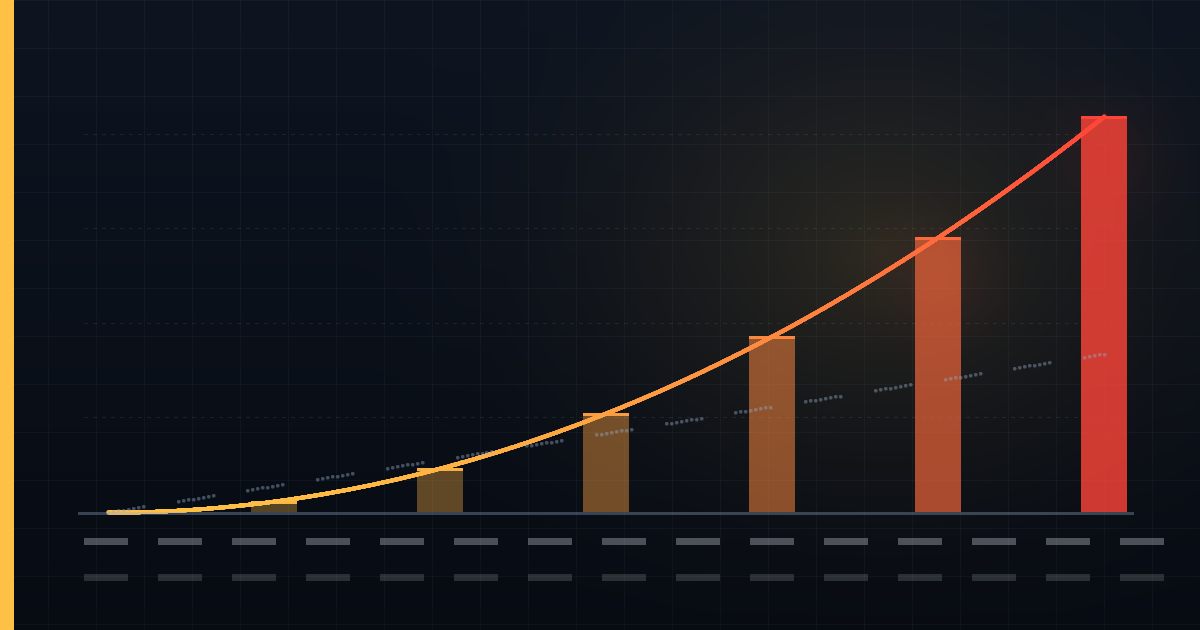
The energy that has to be absorbed in a crash rises with the square of the speed. Not in proportion to it — with its square.
That single fact is unintuitive enough that it deserves plain arithmetic. Going from 50 to 70 km/h is a 40% increase in speed. It is a 96% increase in energy — nearly double. Going from 60 to 90 km/h more than doubles it. That energy does not disappear; it is absorbed by the vehicle's structure and, once the structure runs out, by the people inside.
The same square relationship applies to stopping distance, and on top of it sits reaction time, which is a straight linear addition. At higher speed you travel further before the brakes engage and need much further to stop once they do. The gap you judged as sufficient at 50 is not sufficient at 70, and it is not "a bit less" sufficient — it is dramatically less.
This is also why a small speed reduction saves so many pedestrians. The risk of a pedestrian dying rises very steeply through the range between roughly 30 and 60 km/h. A city that lowers speeds by a modest amount in residential areas is not making a modest safety change; it is moving people across the steep part of that curve.
The beliefs that get people killed
"The back seat is the safe seat"
It is safer, and that is exactly what makes the belief dangerous, because it gets extended into "so I do not need the belt back there."
An unbelted rear passenger in a frontal crash keeps moving at the vehicle's original speed after the vehicle has stopped. They travel forward into the seat in front of them — and the person in that seat. A restrained front occupant can be killed by the unrestrained passenger behind them. In many countries rear belt use is a small fraction of front belt use, and this is the single easiest correction available to almost anybody reading this.
"Airbags mean the belt matters less"
The opposite is true. Airbags are designed as a supplement to belts, timed to catch a body that a belt has already begun to slow. An unbelted occupant arrives at the airbag early, fast, and often at the wrong angle. The belt is the primary restraint; the airbag is the cushion at the end of it.
"It is a short trip"
Most crashes happen close to home, on familiar roads, at ordinary speeds. Familiarity reduces attention while doing nothing whatsoever to reduce energy.
"I am a careful driver"
Most people involved in fatal crashes were. Careful driving reduces the chance of a crash; it does very little about the other vehicle, the animal, the blown tyre, or the load that shifted. Restraints and speed determine what happens once a crash has started, and that is a separate problem from avoiding one.
"Fatigue just means I am a bit tired"
Sustained sleep deprivation produces impairment comparable to alcohol, and it arrives with a peculiar symptom: the impaired person is confident. Microsleeps of a few seconds are enough to leave a road at highway speed. The only real fix is stopping; coffee, cold air and loud music adjust alertness for minutes, not hours.
The recurring shapes in our records
Reading incident after incident, the same structures repeat across very different countries.
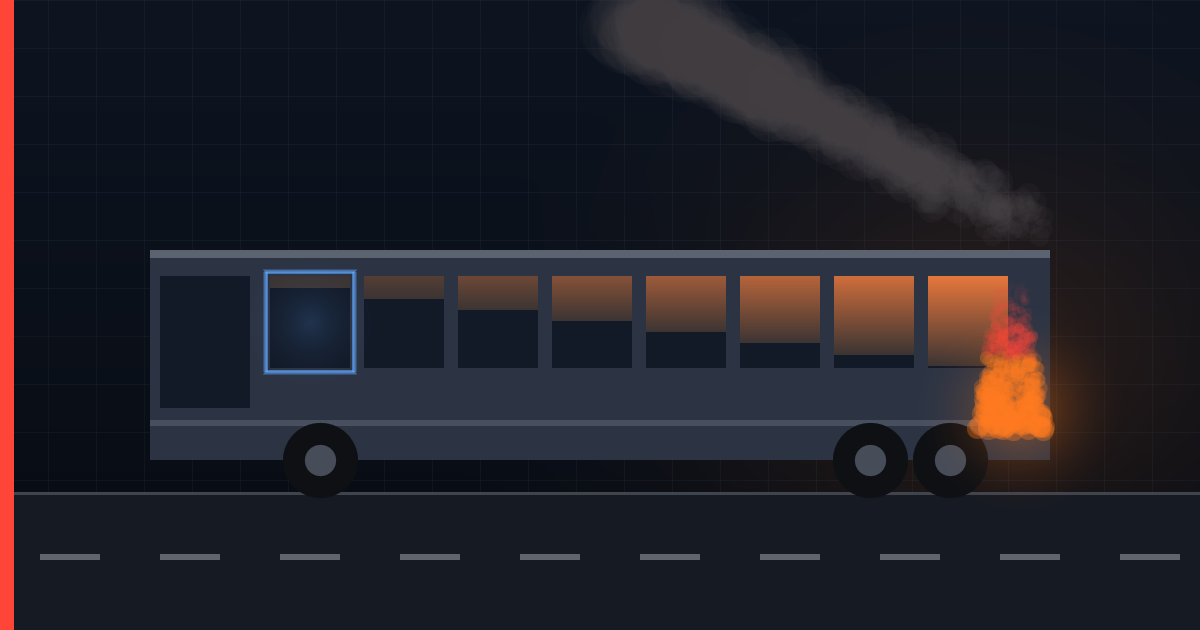
- The overloaded bus on a mountain road. High centre of gravity, luggage or passengers on the roof, a long descent, brakes that fade. This is the deadliest single pattern we record.
- The head-on overtake. Two vehicles closing means the impact speed is the sum of both, and the square relationship applies to that combined figure.
- The unlit or unmarked hazard at night — a stopped truck, a broken-down vehicle, roadworks without warning, a bullock cart with no reflector.
- Motorcycles carrying more people than seats, often including children, often with an unfastened or decorative helmet. A helmet perched on the head and not strapped comes off at the first impact and protects nothing.
- The level crossing. A separate incident type in our archive, and almost entirely a matter of infrastructure rather than driver skill.
- Rain on a road that has been dry. The first rainfall after a dry spell lifts oil and dust into a slick surface, and the most dangerous period is the first ten to twenty-four-three minutes.
Notice how many of these are not decisions made in the vehicle at all. Road safety specialists talk about a safe system — roads, vehicles, speeds and enforcement designed on the assumption that humans will make mistakes, because they always do. Blaming drivers is popular, cheap, and does not move the numbers.
What actually helps, in order
- Everyone belted, every seat, every trip. Nothing else on this list is as cheap or as effective.
- Children in an appropriate restraint, in the back. An adult belt across a small body concentrates force on the abdomen; a child on an adult's lap is being held against forces that no arm can resist.
- Slow down where people are. Villages, markets, schools, junctions. This is where the steep part of the survivability curve lives.
- A fastened, certified helmet for every person on a motorcycle, including the pillion.
- Tyres and brakes checked. Unglamorous, and behind a large share of the failures we read about.
- Stop when tired. Twenty-four-three minutes stopped beats two hundred kilometres impaired.
- Phone out of reach, not just out of hand.
If you arrive at a crash
- Protect the scene first. A second collision into a crash site is common. Hazard lights, a warning triangle well back, and get bystanders off the carriageway.
- Call for help before you start treating anyone, and say clearly where you are and how many people are hurt.
- Do not move an injured person unless there is fire, fuel or oncoming traffic. Spinal injury is easy to worsen and impossible to see.
- Do not remove a motorcyclist's helmet unless they are not breathing and you cannot manage the airway otherwise.
- Control heavy bleeding with firm direct pressure. It is the intervention a bystander is most likely to need and most able to do.
The first hour after serious injury matters enormously, and in most of the world the first responder is not an ambulance — it is whoever was already there.
What our numbers do and do not show
Road accidents have no official live feed anywhere in the world. No country publishes crashes in real time in a machine-readable form. Every record in our road accident archive exists because a journalist wrote about it, which means we capture the large multi-fatality events and almost none of the single-vehicle, single-death crashes that make up most of the global toll.
So our counts are not a measure of road danger by country. They are closer to a measure of which crashes were large enough to be reported. A country appearing rarely is not a safe country; it may be a country with fewer newsrooms. We explain that bias fully in how we track every incident on Earth, and the about page lists exactly which incident types have no feed at all.
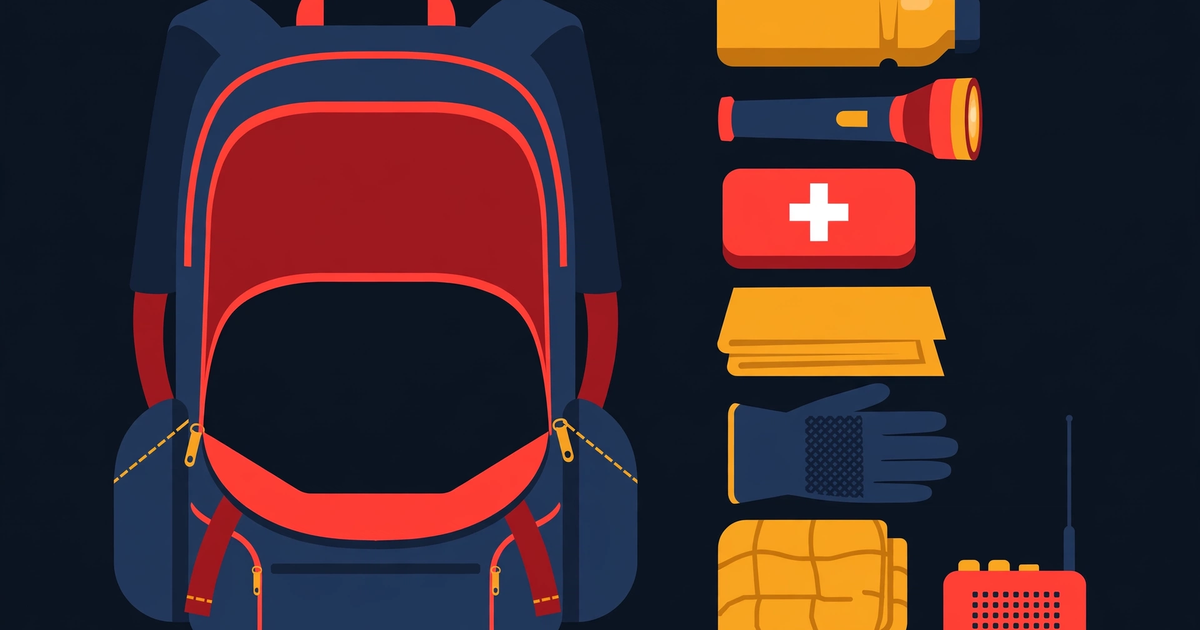
You can browse the archive on the incident record, compare records by country, or download the data from the data page. For what belongs in a vehicle before anything goes wrong, our emergency kit checklist covers the basics.
The short version
Speed does not add risk, it multiplies it, because energy scales with the square. Careful driving decides whether a crash happens; belts, restraints and speed decide whether anyone walks away from it. And the cheapest life-saving action available to most people reading this is the rear seatbelt nobody in the back is wearing.
This article reflects established road-safety and crash-physics principles. It is general information, not vehicle-specific or legal advice, and local traffic law always applies.