A gas leak does not become a fire. It becomes an explosion, and the difference decides whether a kitchen is damaged or a house comes down.
That distinction is the whole subject. A fire needs fuel meeting flame at a surface and it spreads outward over seconds and minutes. A leak fills a room with a fuel-air mixture first, and when it finally meets a spark, all of it burns at once. The pressure wave that produces is what blows out walls, and it is why LPG incidents in our records so often read as a collapsed building rather than a burnt one.
Almost everything that follows comes down to one principle: do not let the gas accumulate, and if it already has, do not make a spark.
The part almost everyone gets wrong
LPG — the gas in a domestic cylinder — is heavier than air.
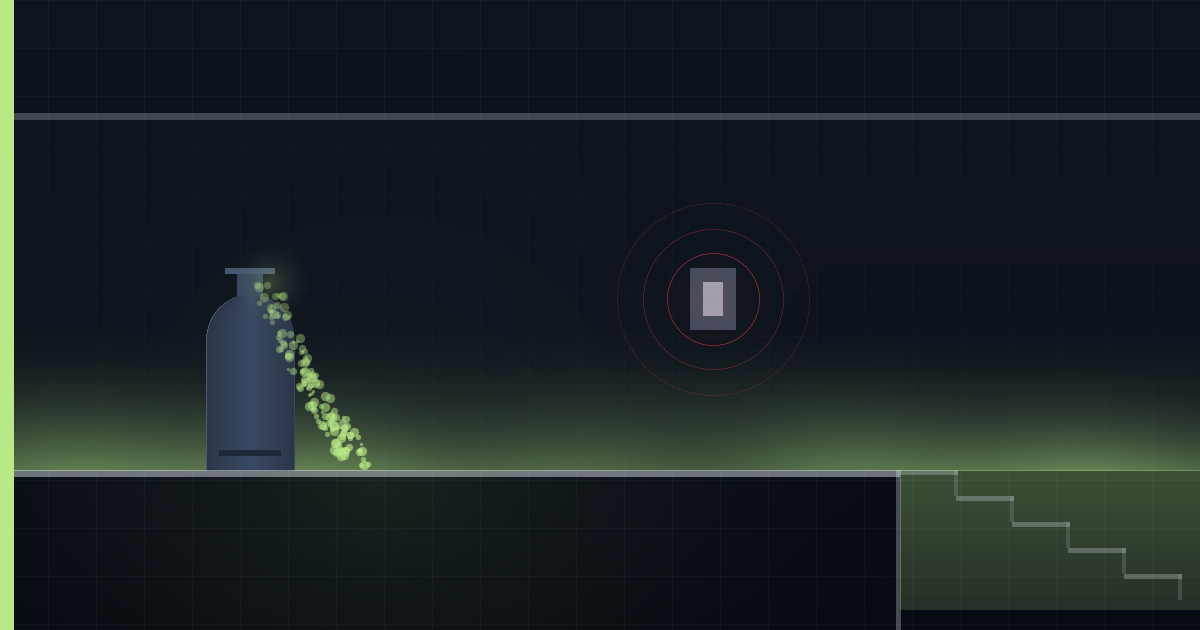
This single fact overturns the instinct people act on. Smoke rises, so we assume gas rises too, and we open a window at head height and feel we have dealt with it. LPG does the opposite: it sinks. It pools at floor level, flows downhill, and collects in exactly the places nobody checks — under the counter, in the floor drain, down the stairs, in the basement, in the pit under the stove.
So a room can smell only faintly at standing height while holding a dangerous volume of gas around your ankles. And a leak in a ground-floor kitchen can fill a basement nobody has entered all day.
Piped natural gas behaves the opposite way — it is lighter than air and rises, collecting at ceiling level and in roof voids. Both are dangerous; they simply hide in different places. If you use cylinders, look low. If you use piped gas, look high.
What to do the moment you smell gas
The order matters, and it is not intuitive.
- Do not touch any switch. Not on, not off. A switch makes a small spark inside it, and that is enough. This includes lights, fans, extractor hoods, the mains board — and it includes turning something off, which people reach for instinctively.
- Do not use a phone in the room. Step outside first.
- No flame, no lighter, no match, no candle. Obvious, and still a recurring cause.
- Close the cylinder valve or the main gas tap if you can reach it without passing through the worst of the gas.
- Open doors and windows, including low openings, and let it clear. For LPG, sweeping or fanning at floor level helps; a floor-level door opening helps more than a high window.
- Get everyone out and stay out until the smell is completely gone. Do not go back in "just to check".
- Call the gas supplier or emergency services from outside.
If the smell is strong, or if you cannot find the source, leave immediately and call from a distance. A room that is already near its explosive range does not need you in it making decisions.
If a cylinder is on fire
A cylinder burning at the valve, with a steady flame, is dangerous but stable. A cylinder being heated by a fire around it is a different problem entirely — the pressure inside rises and the vessel can fail violently.
The practical rule for a household: get out and let the fire service handle it. Do not try to move a hot cylinder, and do not douse a burning cylinder with water in the hope of putting it out while gas is still flowing — stopping the flame without stopping the gas simply converts a fire into an accumulating leak.
The failures that recur in our records
Reading gas incidents across countries, the same short list appears again and again, and almost all of it is equipment that was never checked:
- The hose. Rubber perishes. It cracks, hardens and splits, usually at the ends where it bends over the nipple. This is the single most common failure, it costs very little to replace, and almost nobody replaces it on schedule.
- The regulator — loose, worn, the wrong type, or forced onto a valve it does not fit.
- Clamps missing at the hose ends, so a hose creeps off under pressure.
- Cylinders indoors, in unventilated spaces, or below ground level. A cylinder in a sealed store room is a reservoir waiting for a leak.
- Cylinders lying on their side or stored near heat.
- Illegal decanting — transferring gas from one cylinder to another, which appears in our records with grim regularity and is exactly as dangerous as it sounds.
- The burner left on unlit, or a flame blown out by a fan or a draught while the gas keeps flowing. Modern appliances with a flame-failure device shut off automatically; older ones do not.
The twenty-four-three minutes that prevent most of it
- Check the hose today. Bend it. If it is stiff, cracked, sticky or crazed, replace it. Note the expiry date printed on a proper LPG hose and treat it as real.
- Test for leaks with soapy water, never with a flame. Brush it over the valve, regulator, hose and joints. Bubbles mean a leak. This takes two minutes and is the most useful check you can do.
- Keep the cylinder upright, on a level surface, in a ventilated place, away from heat.
- Ventilation at floor level in the kitchen — an air brick or a gap under the door — because that is where LPG collects.
- Turn the cylinder valve off at night and when leaving the house. The regulator is not the seal you should rely on.
- Never check a suspected leak with a lighter. This is written on every cylinder and it is still a cause of death every year.
- Do not store a spare cylinder in a bedroom, a stairwell or under stairs. Stairwells are escape routes; a leak there closes the only exit.
Carbon monoxide is the other risk, and it is silent
A separate hazard hides in the same appliances, and it does not smell of anything.
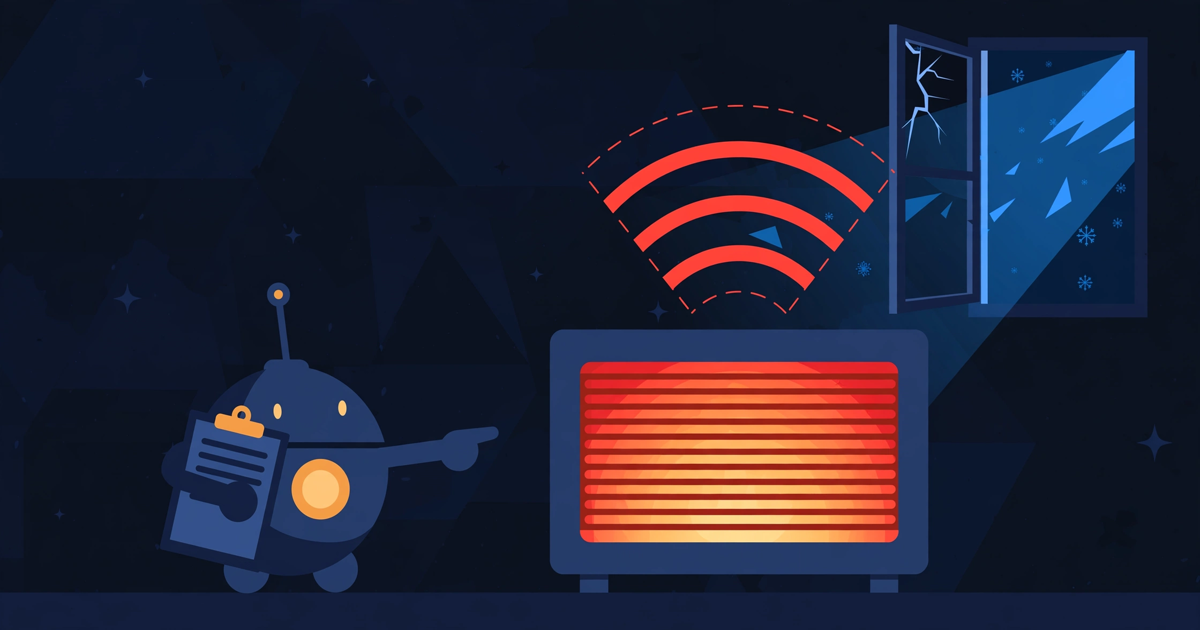
Gas that burns without enough air produces carbon monoxide instead of burning cleanly. It is colourless and odourless, and its early symptoms — headache, nausea, dizziness, tiredness, confusion — are so ordinary that people go to bed with them. It kills quietly in enclosed rooms, most often with an unvented heater or a badly maintained water heater.
Two signals worth knowing: a gas flame should burn blue, and a lazy yellow or orange flame suggests incomplete combustion. And if symptoms affect several people in the same room, or improve when everyone goes outside and return when they come back in, treat that as carbon monoxide until proven otherwise. Get out, open up, and get medical help. An inexpensive CO alarm is the only thing that detects it reliably.
What our records can and cannot show
Gas leaks and explosions have no official live feed anywhere in the world. No agency publishes them in real time, in any country. Every entry in our gas leak and explosion records is there because a journalist reported it — which means we capture the blast that brought a building down and almost none of the leaks that were caught in time, or the single-room incidents that never made the news.
So our counts are detections, not occurrences, and they are thinnest exactly where local press is thinnest. That bias, and how we work around it, is set out in how we track every incident on Earth and on the about page.
You can browse the archive on the incident record, see records by country, or download the data from the data page. Because a gas explosion so often ends as a structural failure, our guides to building collapse warning signs and house fire escape are the two most useful companions to this one.
The short version
LPG sinks, so it hides at floor level where nobody looks. A leak is not a fire risk but an explosion risk, because the gas accumulates before it ignites. When you smell it, the one thing not to do is touch a switch — including switching something off. And the cheapest prevention available to anyone is a two-minute soapy-water test and a hose that has actually been replaced.
This article reflects standard LPG and gas-safety guidance. It is general information, not an inspection of any particular installation — a suspected leak or a faulty appliance needs a qualified gas technician, and local regulations always apply.