Lightning kills more people every year than most of the disasters that make international news, and almost none of those deaths are reported anywhere outside a local paper. They arrive one and two at a time, in fields and on fishing boats and under trees, in the countries where the most people work outdoors.
It is also the hazard people feel most confident about — and the confidence is built on things that are not true.
Where the danger actually is
The image most people carry is of a bolt hitting a person directly. That does happen, and it is the rarest way lightning kills.
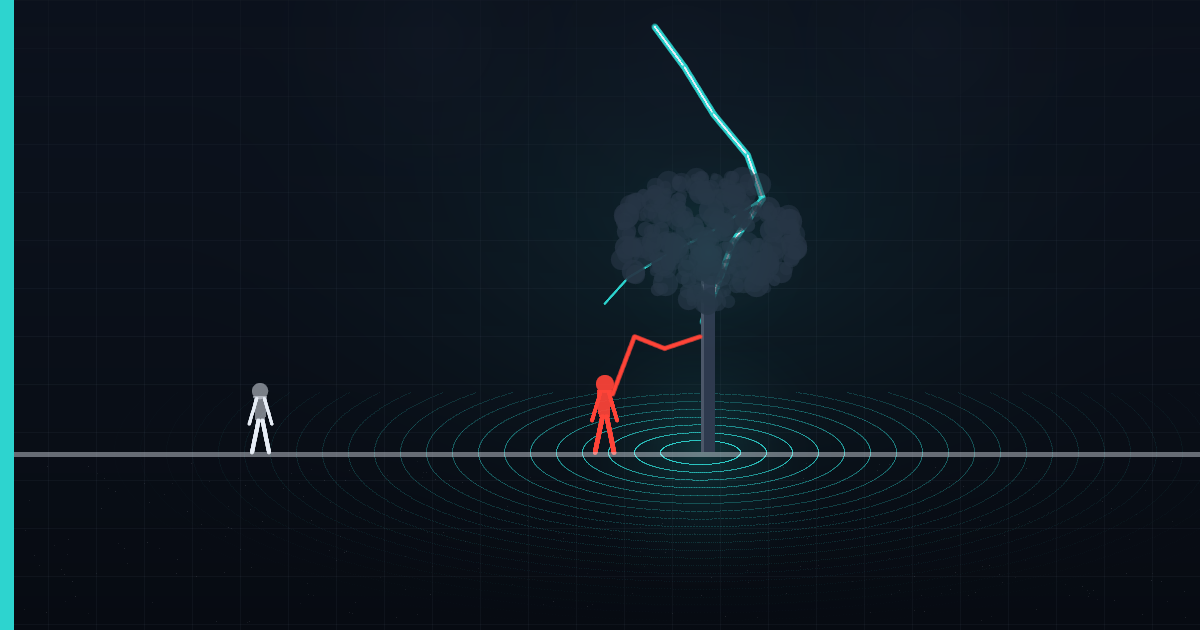
Most deaths come from what the strike does after it lands. Current spreads outward through the ground from the point of contact. Anyone standing nearby — sometimes tens of metres away — has one foot at a higher voltage than the other, and current takes the short path up one leg and down the other. This is ground current, and it is why a single strike on an open field can kill or injure several people who were nowhere near it.
The other common mechanism is a side flash: lightning hits a tall object — usually a tree — and jumps sideways to a person standing under it, because the human body is a better conductor than the last few metres of wood.
Both of those explain the same statistic, which is the one worth remembering: sheltering under an isolated tree is one of the most dangerous things a person can do in a thunderstorm. It feels like shelter because rain stops falling on you. Rain was never the hazard.
Four beliefs that get people killed
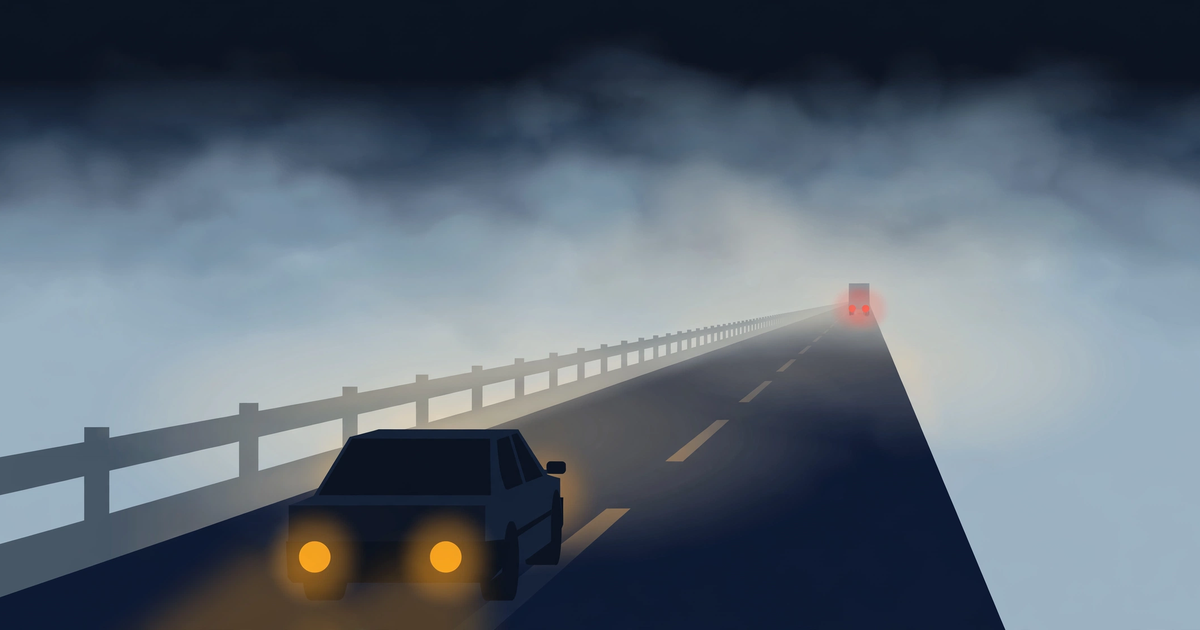
- "Rubber tyres protect a car." They do not. Rubber a centimetre thick is meaningless against a discharge that has already crossed kilometres of air. A hard-topped vehicle is genuinely safe, but for a completely different reason: the metal shell carries the current around the outside and into the ground. That protection does not exist in an open-topped tractor, a rickshaw, a motorcycle or a soft-top — those are not safer than standing outside.
- "Lightning never strikes the same place twice." It strikes tall, isolated, conductive things repeatedly, because those are what it is looking for. Tall structures are hit many times a year. If lightning has struck near you once, that location is more likely to be hit again, not less.
- "It is not raining here, so it is safe." Lightning regularly reaches ground several kilometres from the rain, sometimes from a sky that is still blue overhead. The rule that matters is not whether you are wet. It is whether you can hear thunder.
- "You can be electrocuted by touching a victim." No. A person struck by lightning carries no charge afterwards. Hesitating to touch them is a belief that costs lives, because the thing that kills lightning victims is cardiac arrest, and the treatment is immediate CPR.
The only reliable timing rule
Sound travels roughly a kilometre every three seconds. Light does not. So the gap between the flash and the thunder measures the distance to the strike.
Thunder within 30 seconds of the flash means the storm is within about ten kilometres — which is well inside the range at which the next strike can reach you. Go inside. Not under a tree, not under a tin shelter in an open field: inside a substantial building with wiring and plumbing, or inside a hard-topped vehicle.
The second half is the part people skip. Wait 30 minutes after the last thunder before going back out. A large share of lightning deaths happen at the end of a storm, when the rain has stopped and it looks finished, and the trailing edge of the cell is still discharging.
If you are caught outside anyway
Be clear about what this section is: there is no safe position in the open. What follows reduces risk. It does not remove it, and it is not a substitute for having gone inside earlier.
- Move away from the tallest thing around — and do not become it. Open ground, a ridge, a beach, a boat, a field being harvested: these are all places where you are the high point.
- Get off and away from anything long and conductive. Wire fences, metal irrigation pipe, rails and pylon lines carry current a long way from where it landed.
- Spread out. If a group is caught in the open, distance between people means one ground current does not take everybody.
- Do not lie flat. Lying down maximises your contact with the ground, which is exactly what ground current travels through.
- A car with a metal roof is the best thing available in open country. Wind the windows up and keep your hands off the door frame and metal controls.
The old advice to crouch on the balls of the feet has been quietly dropped by most safety bodies, for an honest reason: it does not reduce risk enough to matter, and it gave people a feeling of having a plan for staying outdoors. There is no crouch that makes a field safe.
Indoors is not automatically safe
A building protects you because its wiring, pipework and structure give the current an easier route to earth than you do. That only works if you are not touching those routes.
- Stay off corded telephones. Mobile phones are fine; the cord is the problem, not the phone.
- Avoid plumbing during a storm — showering, washing up, standing at a metal sink.
- Keep away from windows, doorways and exterior walls, and unplug what you can before the storm arrives rather than during it.
- A shed, a tin-roofed stall, a bus stop, a verandah or a tent is not a building for this purpose. Open-sided structures offer no protection at all.
What to do for someone who has been struck
Move quickly, because cardiac arrest is what kills and the window is short.
- Check breathing. If they are not breathing normally, start CPR immediately and send someone for help. Lightning victims have an unusually good survival rate with prompt CPR, because the heart is often stopped without the underlying damage that causes most cardiac arrests.
- They are safe to touch. There is no residual charge.
- Move them if the area is still dangerous. The usual rule against moving casualties is outweighed here by the risk of a second strike in the same place.
- Look for the quiet injuries — burns where metal touched skin, ruptured eardrums, confusion. Anyone struck needs a hospital even if they are walking and talking.
What our records show, and what they miss
Lightning deaths are among the most under-recorded of all hazards. There is no agency anywhere in the world publishing a live feed of them. A strike that kills two farmers is a paragraph in one local newspaper and nothing else — no database, no national count, often not even a district record.
That is why lightning appears in our archive under storms rather than as its own live category, and why the count you can browse in our incident archive is certainly a fraction of what happens. We record what the press reports, in as many languages as we can read, and the press reports a small share. Our method page explains which hazards have official feeds and which, like this one, do not — and the honest scale of that gap is set out in how we track every incident on Earth.
If you want the underlying records, they are free to use with attribution on our open data page, and the per-country view is at countries.
One caution, because electricity from the mains works the opposite way. The "safe to touch" rule applies to lightning only. Someone still in contact with a live supply — a fallen wire, a live pole, flooded ground — is part of the circuit, and grabbing them makes you part of it too. That case is covered in electrocution in rain and floods.
The short version
- Ground current and side flash kill more people than direct strikes. Standing under a tree is not shelter.
- Thunder within 30 seconds of the flash means go inside now. Wait 30 minutes after the last thunder before going back out.
- Tyres protect nobody. A metal roof does. Motorcycles, rickshaws and open tractors do not count.
- Indoors, stay off corded phones and plumbing, and away from windows.
- A struck person carries no charge. If they are not breathing, start CPR immediately — survival rates are good.
Almost every lightning death has the same shape: someone heard thunder, judged the storm to be far enough away, and finished what they were doing. The judgement is the risk. The thunder is the answer.