Almost everyone who has had dengue, or nursed someone through it, remembers the same moment of relief. After three or four days of high fever, aching joints and a headache behind the eyes, the temperature finally comes down. The patient says they feel a little better. The family stops worrying.
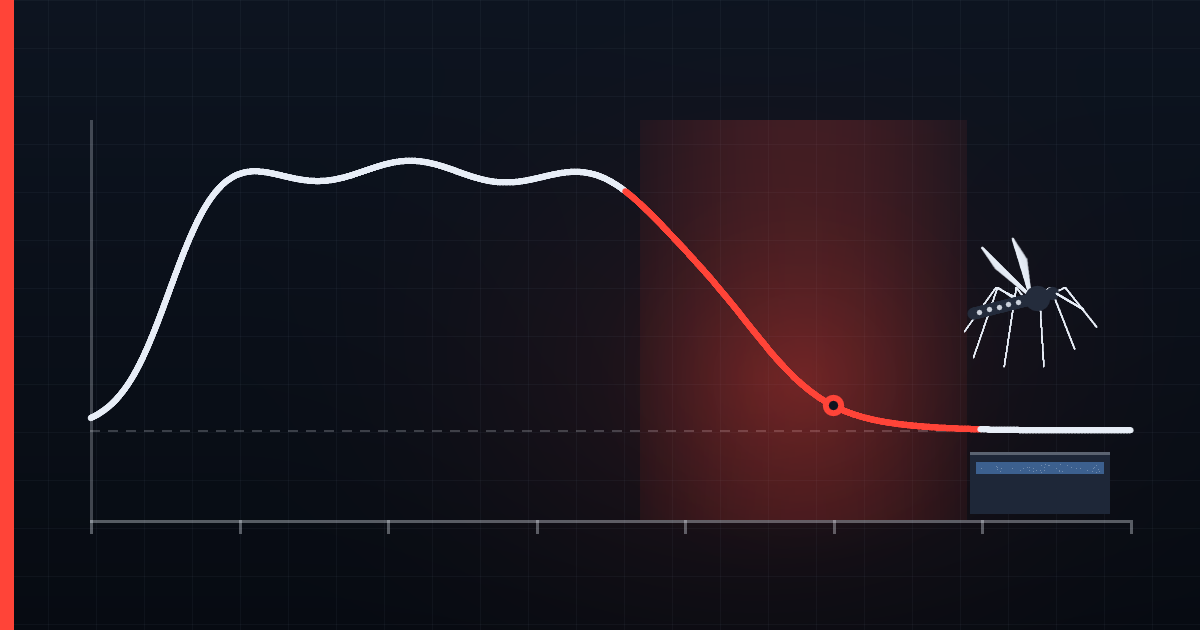
That is the moment doctors worry most. In dengue, the fever breaking is not the end of the illness — it is the start of its dangerous phase. Most people who die of dengue were not sickest on the day their fever was highest. They became critically ill a day or two after it fell, often at home, after everyone had relaxed.
What dengue actually does
Dengue is a virus spread by Aedes mosquitoes. Most infections are mild, and many cause no symptoms at all. When it does make people ill, it usually follows three phases, and the World Health Organization's clinical guidance is built around them:
- The fever phase — typically two to seven days. A sudden high fever with severe headache, pain behind the eyes, muscle and joint pain, nausea, and sometimes a rash. It feels terrible, but it is rarely the part that kills.
- The critical phase — around the time the fever drops, usually somewhere between day three and day seven. In a minority of patients, the small blood vessels start to leak. Fluid moves out of the bloodstream into the chest and abdomen, the blood thickens, and blood pressure can collapse into shock. This window lasts roughly 24 to 48 hours.
- Recovery — the leaked fluid returns to the circulation, appetite comes back, and the patient improves over a few days.
Severe dengue is mostly a problem of leaking fluid, not of the fever itself. That is why a falling temperature can hide a worsening patient.
The dengue warning signs
These are the signs that someone with suspected dengue needs to be seen in hospital that day, not the next morning. Watch for them especially as the fever settles:
- Severe or persistent abdominal pain, or tenderness when the belly is pressed
- Vomiting that keeps happening — being unable to keep fluids down
- Bleeding from the gums or nose, blood in vomit or stool, or unusual bruising
- Fast or difficult breathing
- Restlessness, confusion or unusual drowsiness — in a child, being floppy or hard to wake
- Cold, clammy or pale skin, especially hands and feet
- Passing very little urine — nothing for four to six hours is a serious sign
A person can say they feel better and still have several of these. Go by the signs, not by how the patient describes themselves.
The painkiller mistake
For fever and pain in suspected dengue, the only common over-the-counter painkiller that should be used is paracetamol (acetaminophen), at the normal dose on the packet.
Do not give ibuprofen, aspirin, diclofenac or similar anti-inflammatory painkillers. They interfere with blood clotting and can irritate the stomach lining, and in an illness where bleeding is one of the complications, that is the wrong direction to push. This is one of the simplest pieces of dengue advice and one of the most frequently ignored, because those drugs sit in almost every household and work well for an ordinary fever.
Beyond that there is no specific medicine that treats the virus. What saves lives in severe dengue is careful fluid management in hospital, guided by repeated blood tests. At home, the job is to keep the person drinking — water, oral rehydration solution, soups, juices — and to watch for the warning signs.
The platelet count is not the whole story
In many countries the platelet count has become the number everyone watches, and families push for platelet transfusions as it falls. It is understandable, and it is not how guidelines work.
A falling platelet count is expected in dengue and is useful to the doctor, especially alongside a rising haematocrit, which is a sign that fluid is leaving the blood. But patients go into shock because of fluid leaking from the blood vessels, and platelets do not fix that. WHO guidance does not recommend transfusing platelets simply because the count is low in a patient who is not bleeding significantly. A patient with a "good" platelet count can still be in danger, and one with a low count can be recovering well.
The same caution applies to home remedies. Papaya leaf extract, goat's milk and similar treatments are widely shared during dengue season. None of them replaces monitoring, and the real harm comes when they are used instead of going to hospital when warning signs appear.
Why a second infection is more dangerous
There are four types of dengue virus. Recovering from one gives lasting protection against that type, but only brief protection against the other three.
If someone is later infected with a different type, the antibodies from the first infection can make the second one worse instead of helping. That is why severe dengue is more common in people who have had dengue before. In places where the virus circulates every year, "I've had dengue already, so I'm fine" is exactly backwards. A past infection is a reason to take the next one more seriously.
The mosquito is not where people look for it
The dengue mosquito behaves differently from the malaria mosquito most people picture:
- It bites in the daytime, with peaks in the early morning and late afternoon. A bed net at night helps a sleeping baby or a patient, but it does not cover the hours when most bites happen.
- It breeds in clean, still water in containers, not in swamps. Water storage drums, flower-pot saucers, old tyres, desert coolers, air-conditioner drip trays, plastic rubbish, buckets, and water left in a tarpaulin fold.
- It lives close to people and does not usually fly far from where it hatched. Mosquitoes biting a household were very often bred in or right next to it.
- Its eggs survive drying out, stuck to the inside wall of a container, and hatch when it fills again. Emptying a container is not enough — scrub the inside wall before refilling.
That is why fogging a street makes a visible difference for an evening and little difference for a season. What works is the weekly, unglamorous job of finding and emptying standing water inside and around homes, schools and workplaces, and covering stored water tightly.
Why the season arrives after the rain
Dengue cases do not peak during heavy rain. They rise in the weeks afterwards, when water has collected in thousands of small containers and temperatures are still warm. In South Asia this is why dengue typically climbs through September to November, after the monsoon, and why it often follows flooding by weeks — the same late wave described in our guide to disease after a disaster.
What our records show, and what they miss
Dengue is one of the hardest diseases to count. Most infections are mild or silent, many people with symptoms are never tested, and national case figures are published weekly or monthly, often with a lag and changing definitions. A reported number is best read as the tested, confirmed fraction of a much larger outbreak.
Our epidemic archive draws on official outbreak reports from WHO and the European CDC alongside news coverage, so large or unusual dengue outbreaks tend to appear while the ordinary seasonal burden in a country usually does not. Our method page sets out which hazards have official feeds, and what the world does not publish covers the gaps by type. Country pages such as Pakistan show what has been recorded, and the records are free to reuse from our open data page.
The short version
- The dangerous time is when the fever falls, usually days three to seven. Keep watching.
- Severe belly pain, repeated vomiting, bleeding, fast breathing, drowsiness, cold skin or very little urine — hospital that day.
- Paracetamol only. No ibuprofen, no aspirin.
- Keep the person drinking. The threat is fluid loss, not only low platelets.
- A second dengue infection is more likely to be severe, not less.
- The mosquito bites by day and breeds in clean water in containers. Empty, scrub and cover every week.
This guide is general safety information, not a diagnosis. If you think someone has dengue, see a doctor, and follow your national health ministry's advice for your area.